Designed and prototyped a VR rehabilitation framework using Unreal Engine 5. Built a real-time interaction system that adapts to patient motor responses, reducing cognitive overload while maximising therapeutic engagement.

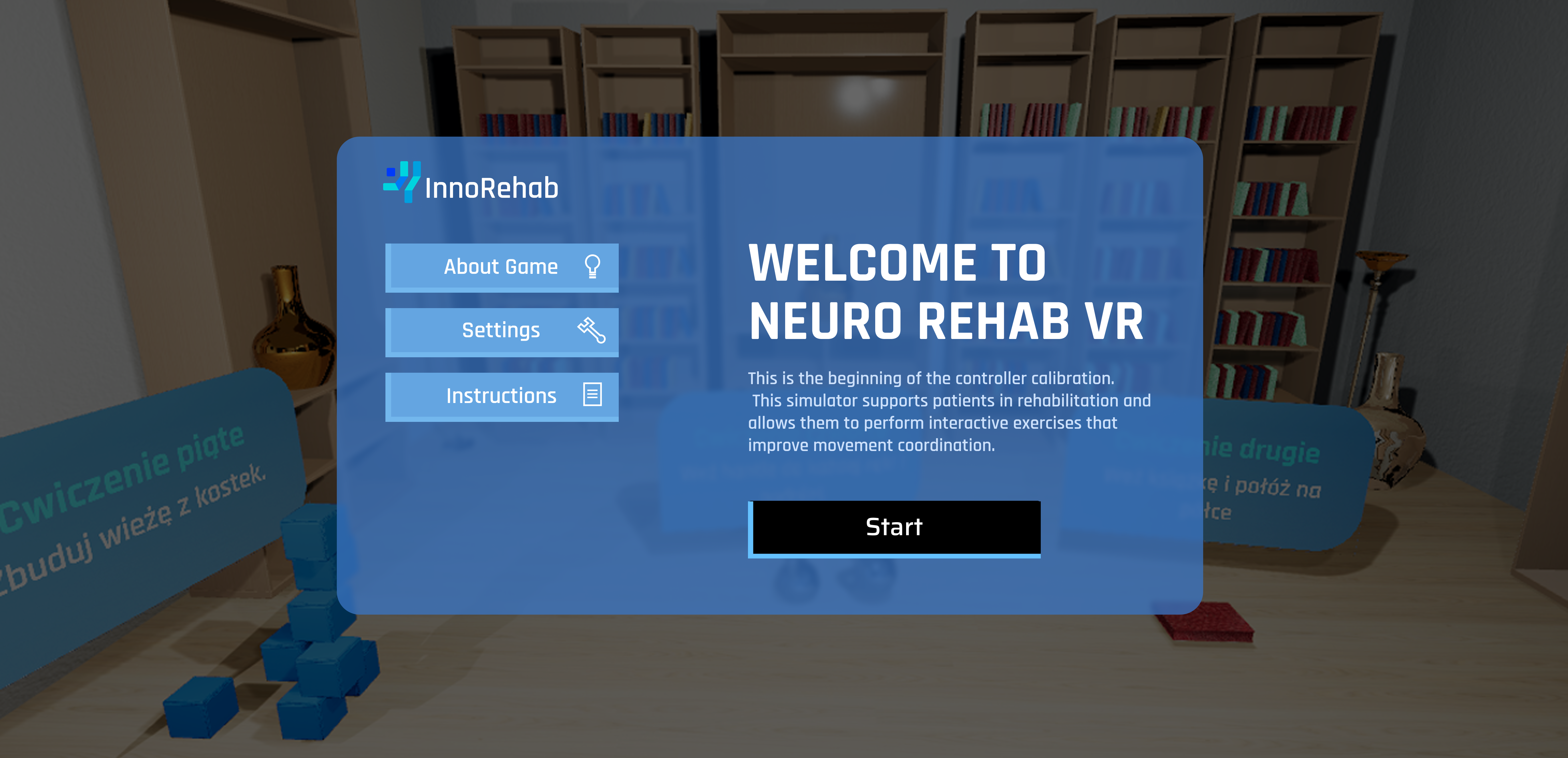
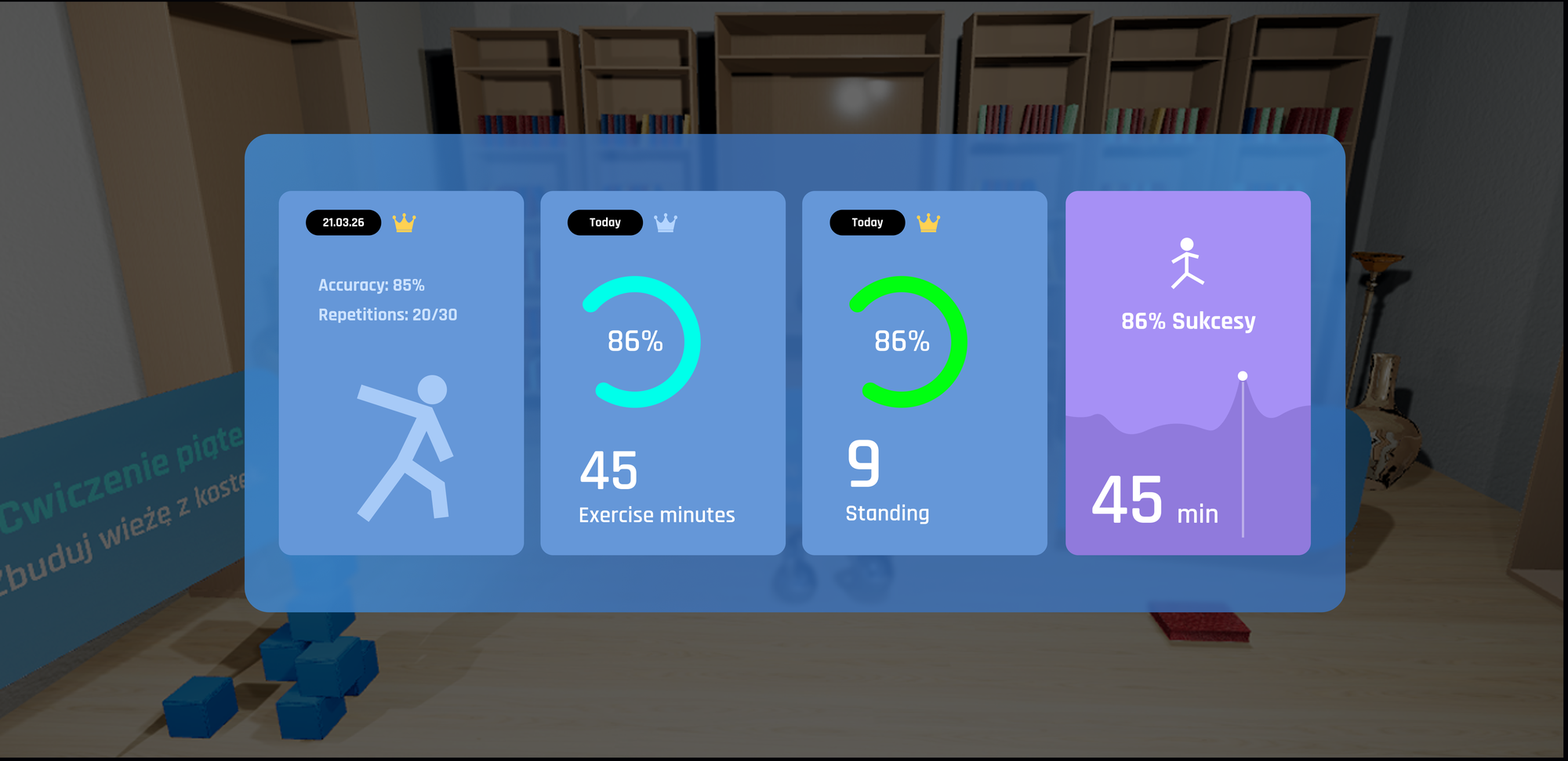
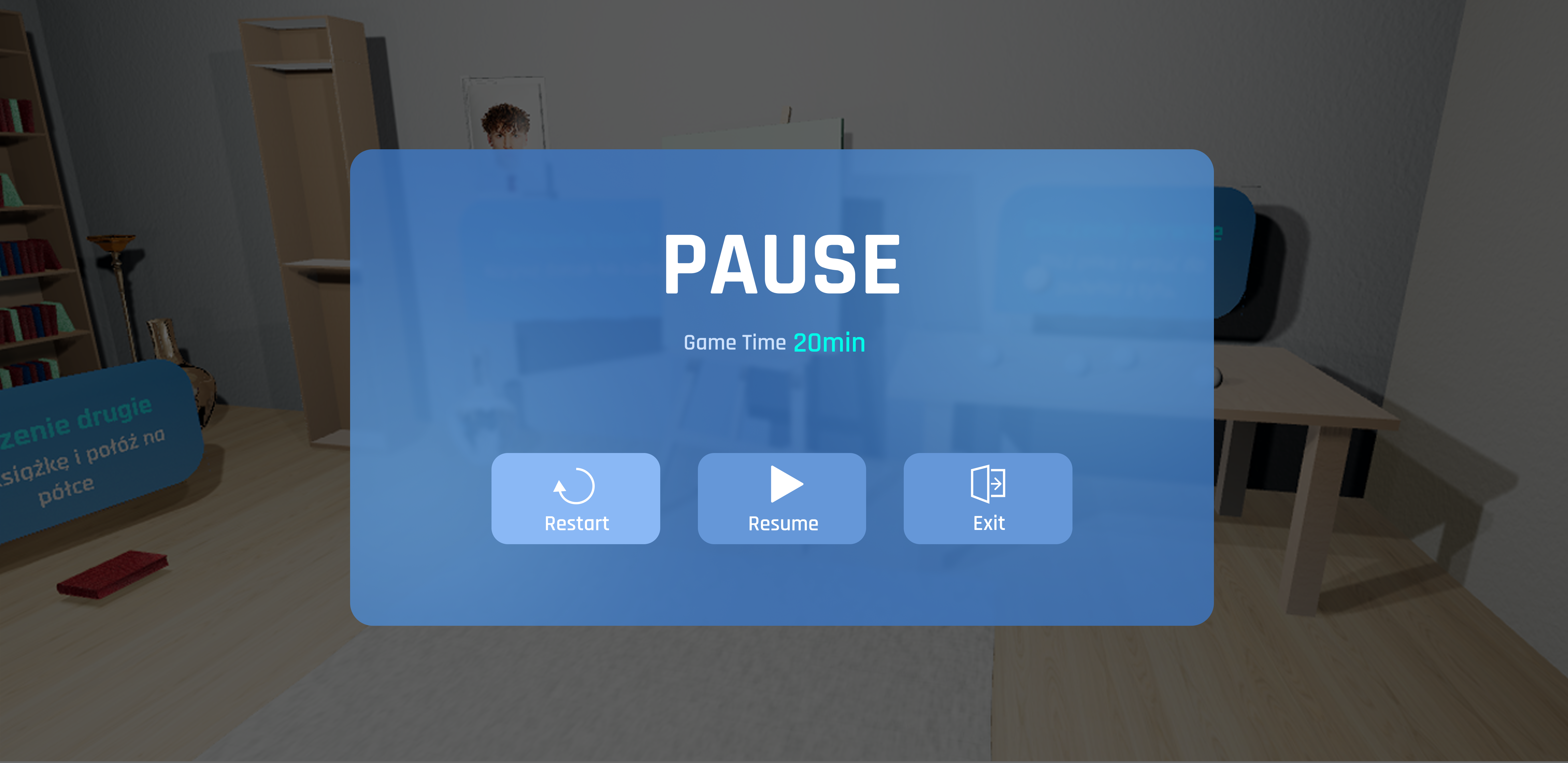
A VR rehabilitation framework built on Unreal Engine, focusing on high-fidelity object interaction and motor skill recovery.
Designed and prototyped a VR rehabilitation framework using Unreal Engine 5. Built a real-time interaction system that adapts to patient motor responses, reducing cognitive overload while maximising therapeutic engagement.
Every object in the environment carries realistic mass, friction, and collision response. Patients learn to recalibrate grip strength and timing through immediate physical consequence — not instruction.
Creation of a clear and intuitive MVP interface that allows users to select exercises in the VR game.
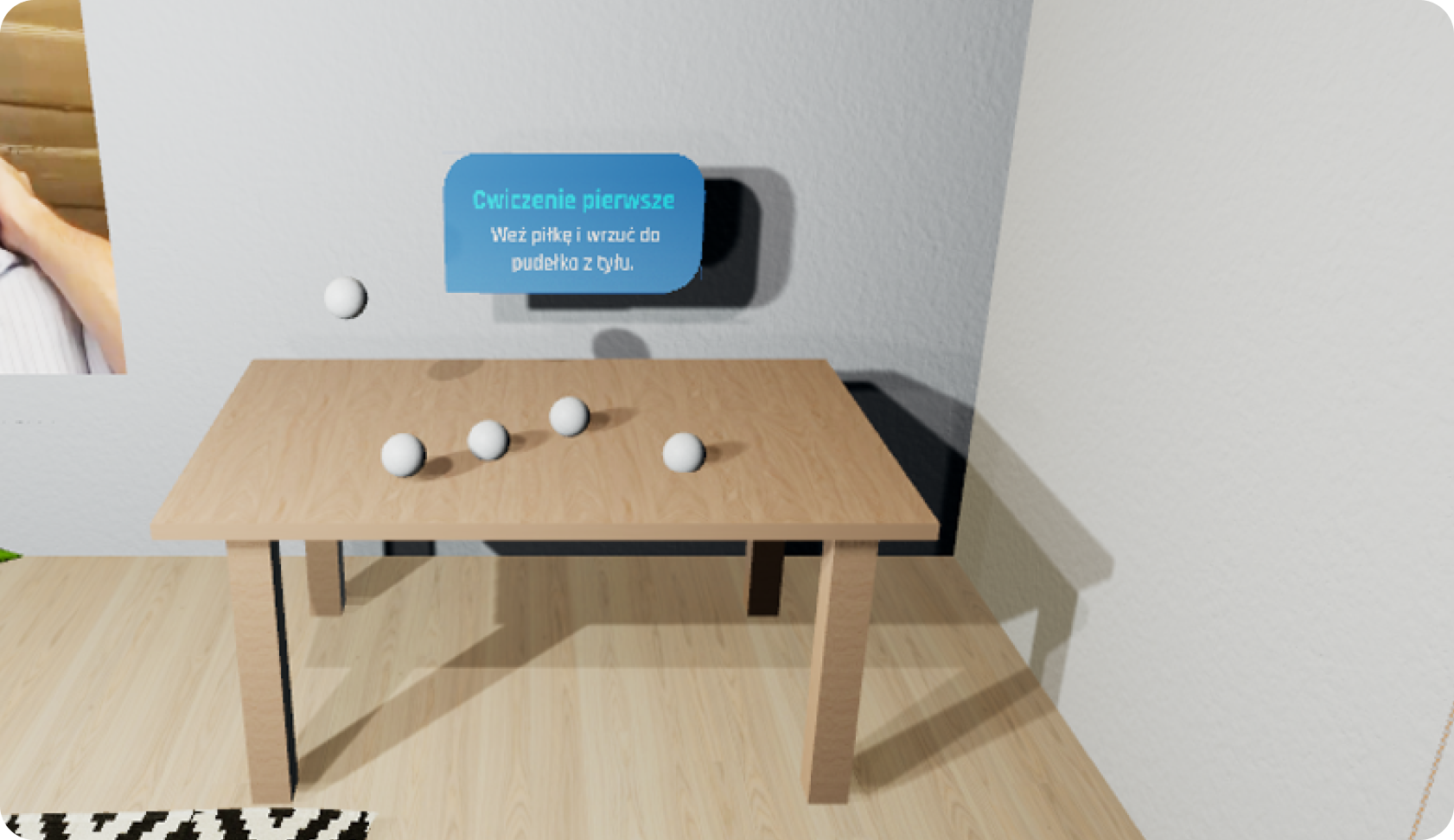
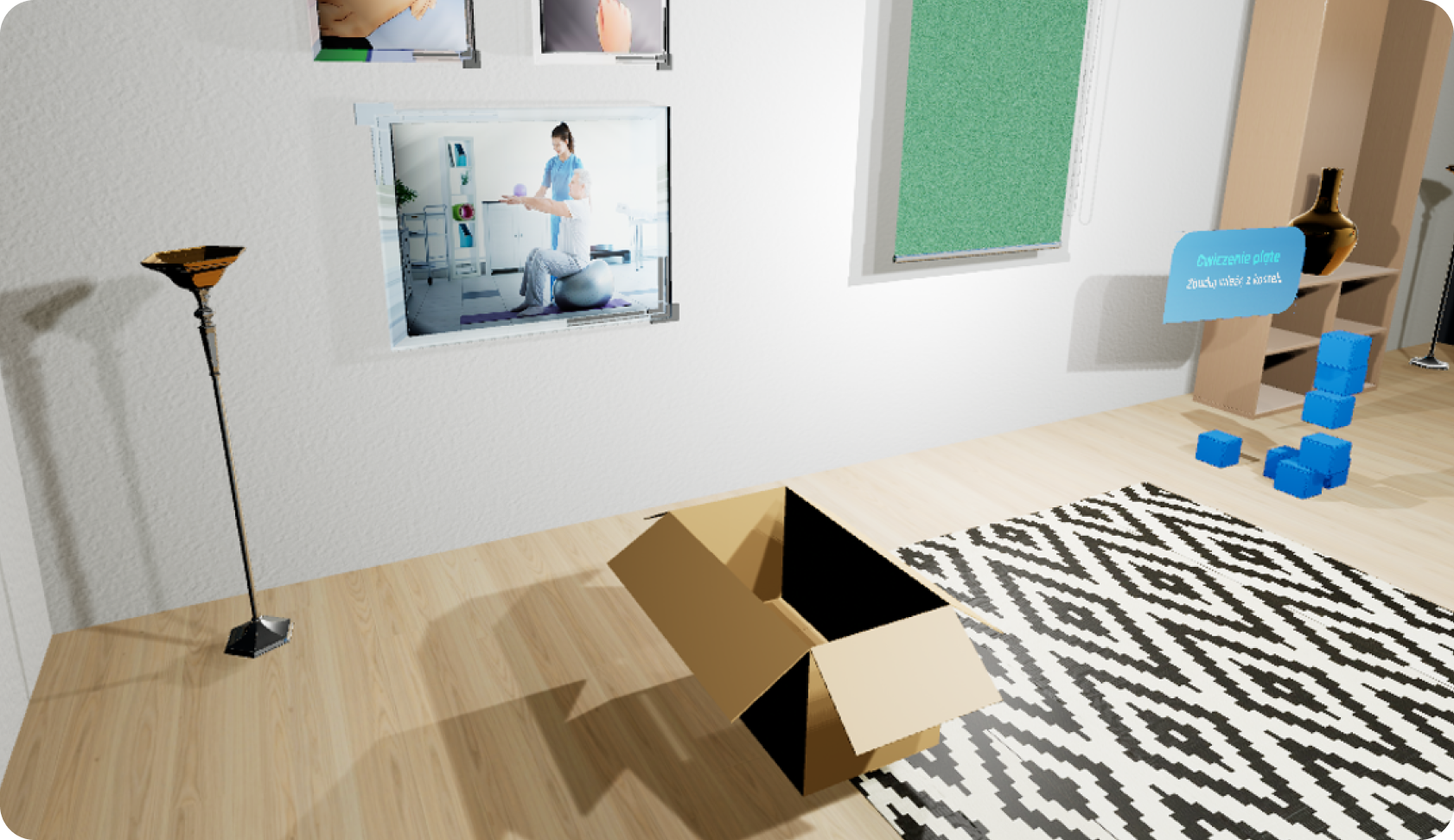
An exercise where the user picks up a ball in the virtual environment and throws it into a box placed behind them — training spatial awareness and motor coordination.
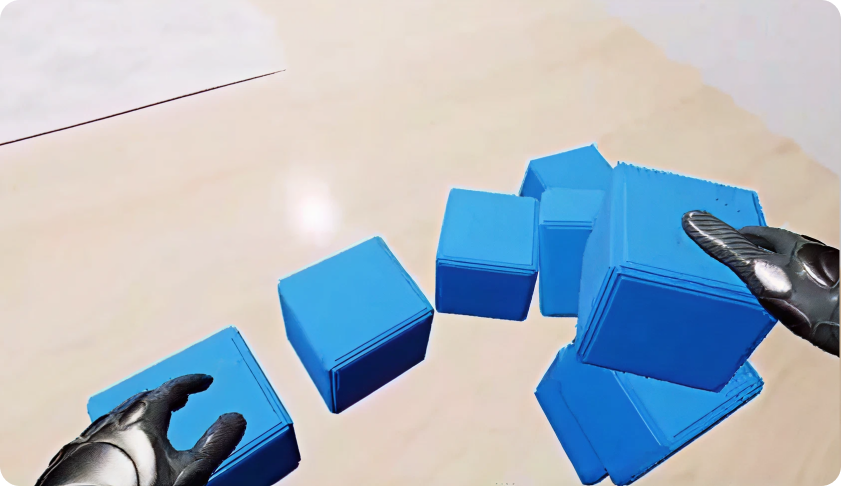
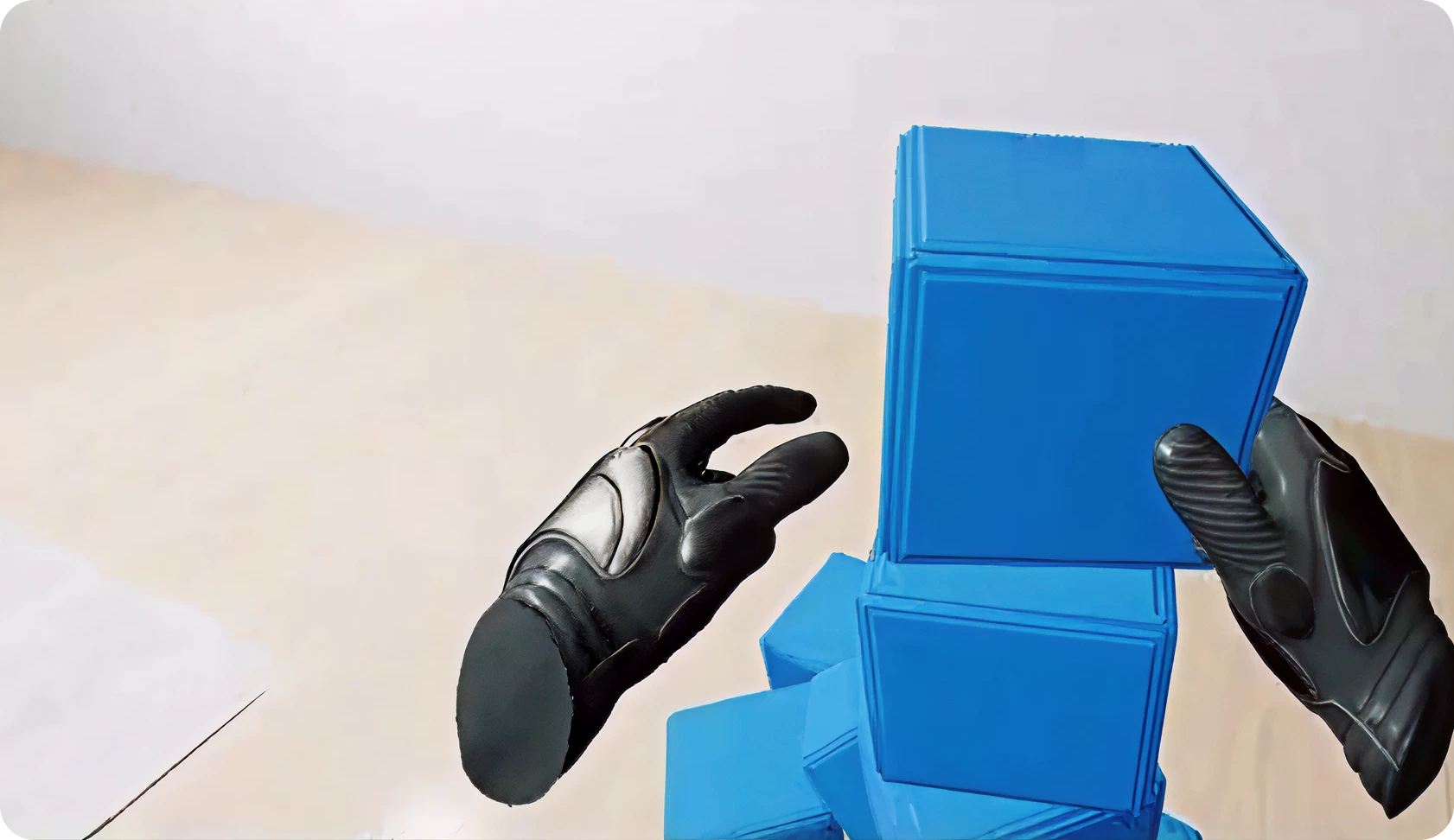
An exercise where the user stacks blocks to build a tower — powered by real-time hand tracking that reads every finger and palm, enabling natural, touchless interaction with virtual objects exactly as in the physical world.
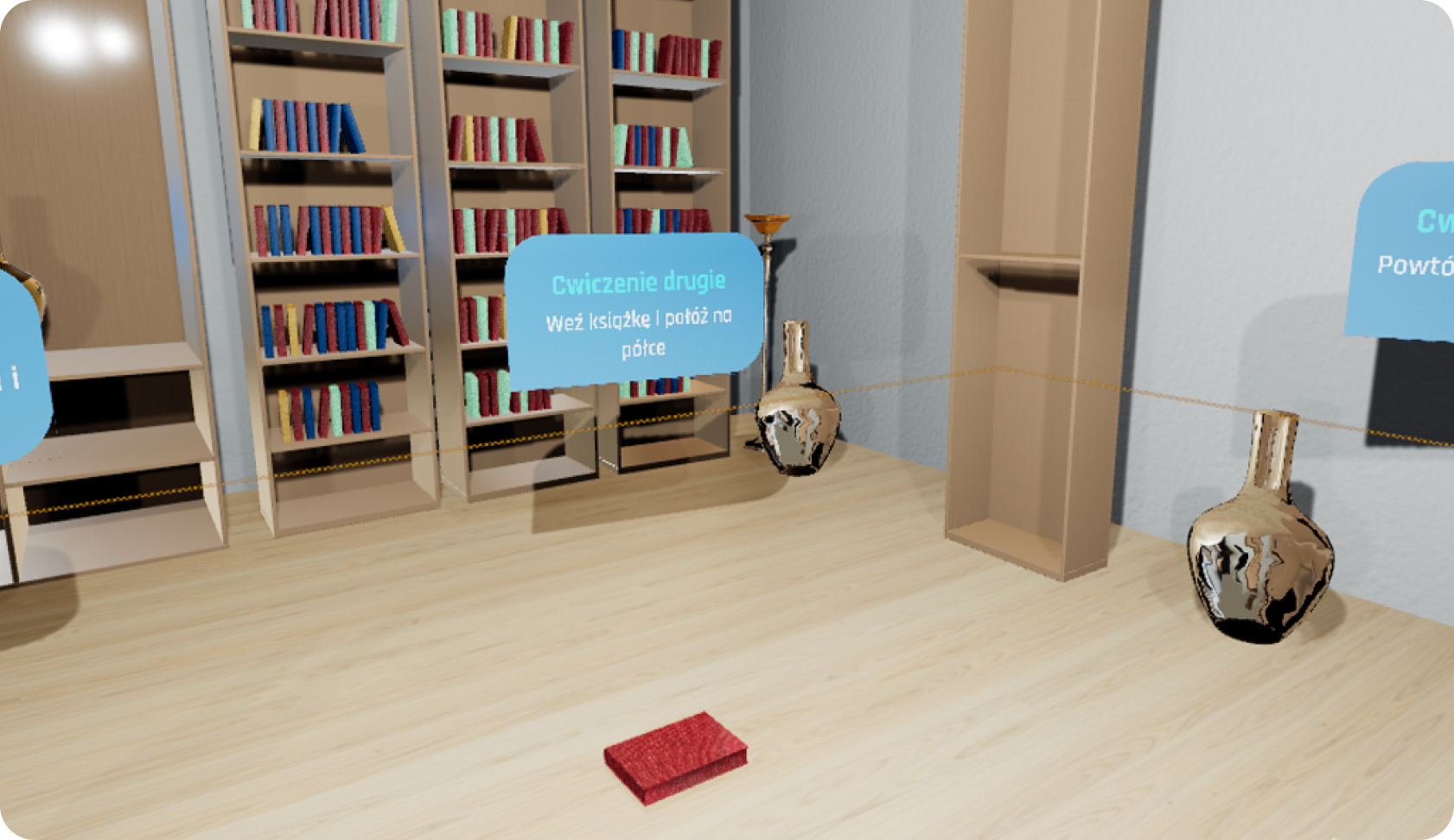
An exercise where the user moves a book toward the cabinet at a specified distance — supporting fine motor control and spatial judgment through VR rehabilitation.
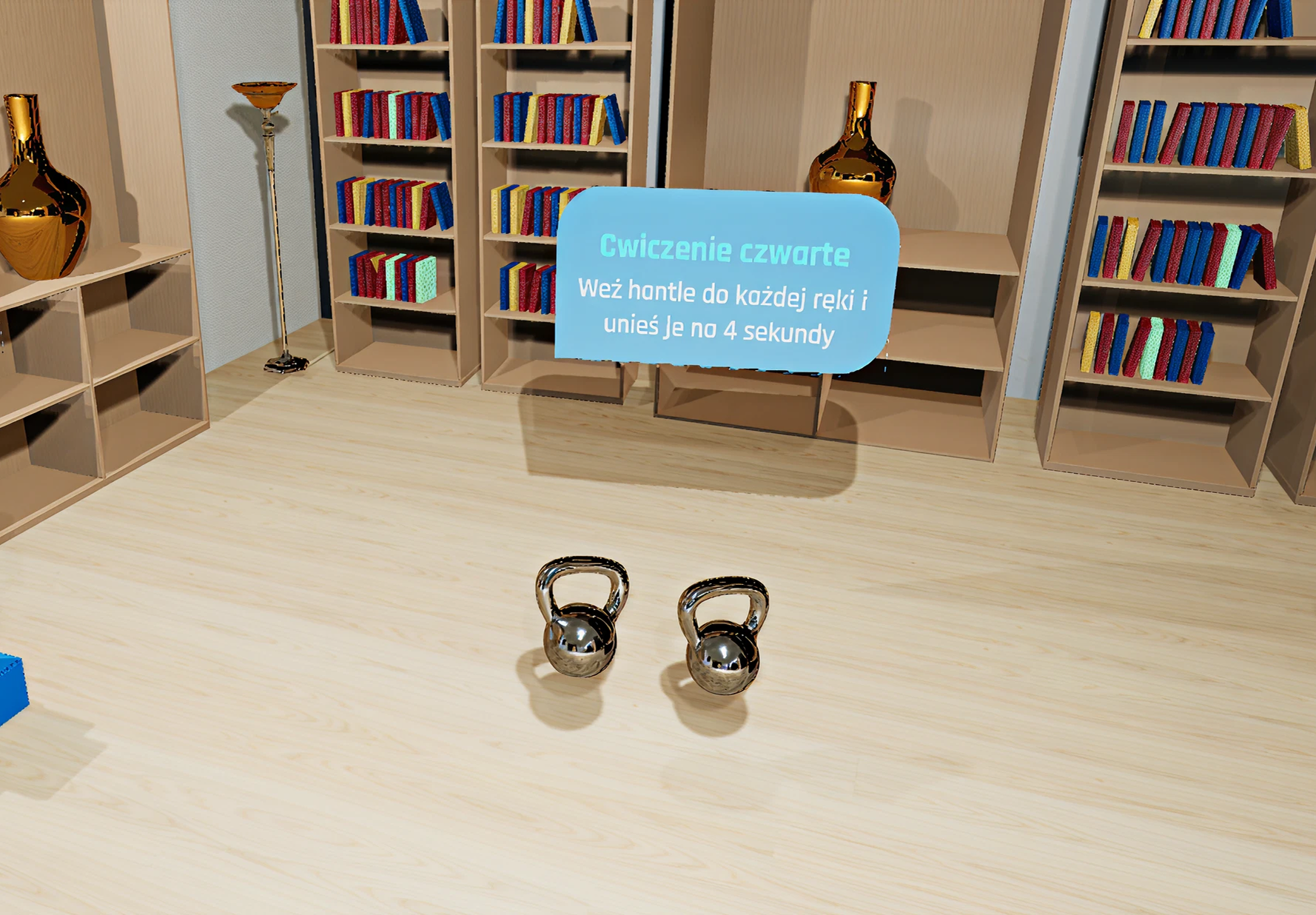
An exercise where the user picks up a dumbbell in each hand and holds them lifted for a set duration — building grip strength and bilateral motor coordination through VR rehabilitation.
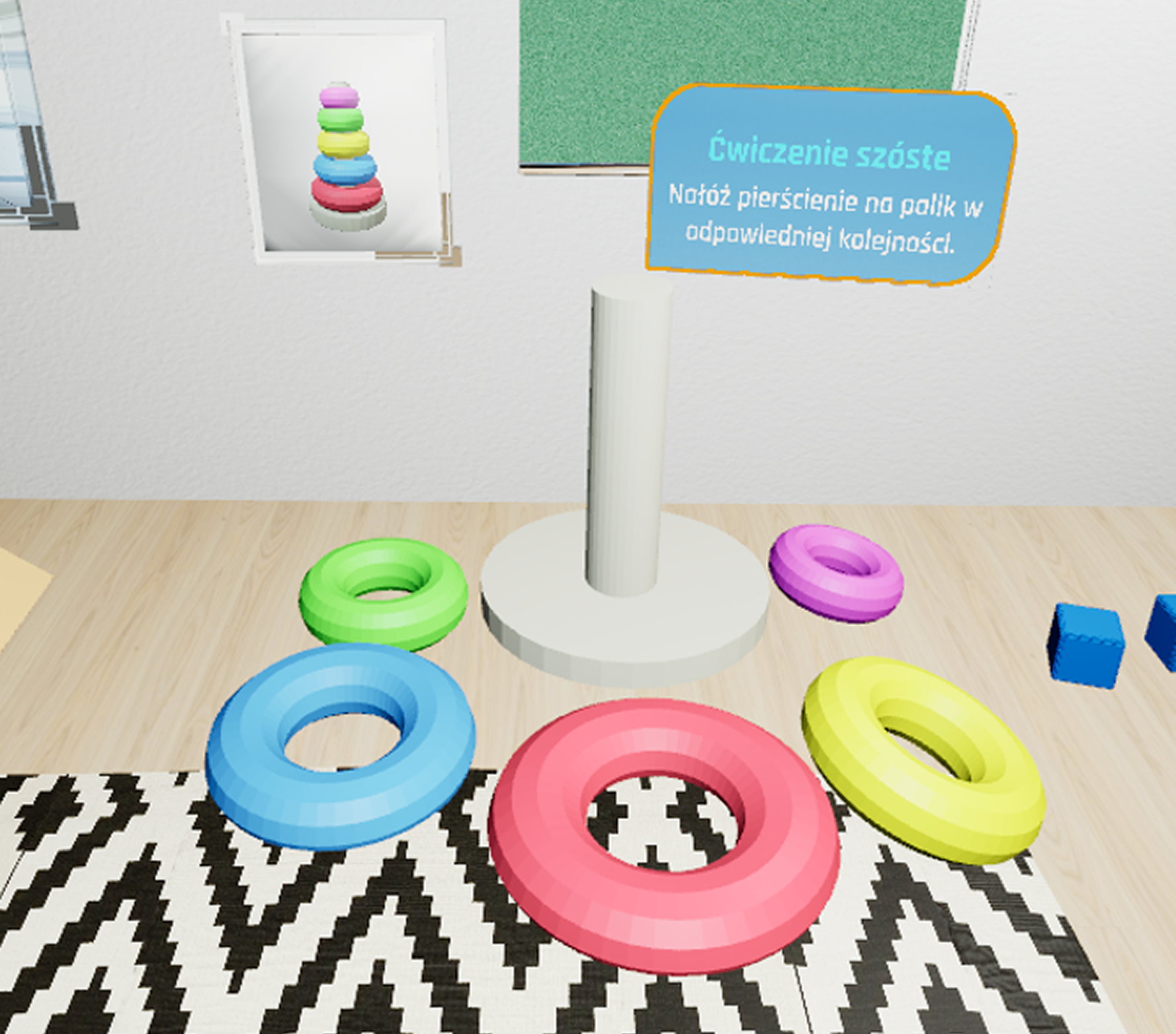
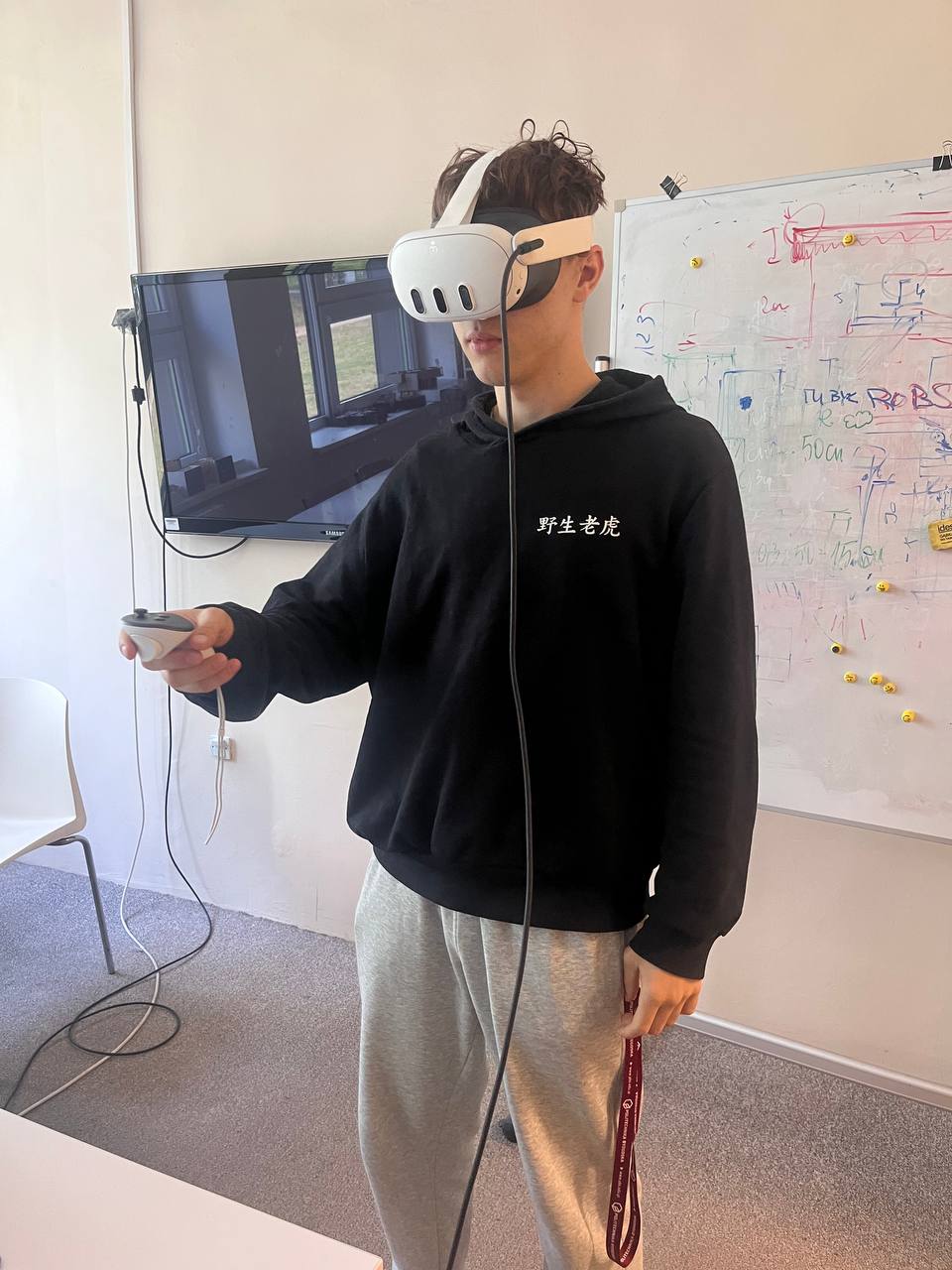
An exercise where the user places rings onto a pole in the correct sequence — training cognitive planning, precision, and hand-eye coordination through VR rehabilitation.
Open the project in Google Drive — all materials and source files are available via the link.
Open ProjectKeep exploring.
Next